I’ve now lived through several “everything is changing” moments in this industry: analog to digital, tape to file, SD to HD, hardware to software, on-prem to cloud, and now whatever we’re calling this one. The first big transition of my career taught me lessons that have held true through every one since.
The efficiency promise is real — and it hides a trap.
In my earliest days, the pitch for moving from a linear, tape-based world to a non-linear, file-based workflow was pure efficiency: remove steps, run tasks in parallel, and stop having to watch everything in real time just to move it from one place to another.
The promise generally held true. But here’s what everyone missed during the change — myself included.
When you dub a tape, someone is sitting there while it plays through. Nobody ever wrote “quality check” on that step, because it wasn’t a step. It was just a person, present, in real time, who would catch the obvious problem — the audio that dropped, the hit in the picture, the wrong reel — because they couldn’t not see it. The moment we went file-based, the transfer became faster than real time and the human left the loop. We didn’t remove a QC step. We removed a QC step that had never been written down anywhere, so nobody knew to replace it.
That was the real education: every workflow has explicit steps and implicit ones. The explicit steps are on the diagram. The implicit ones live in the fact that a person was in the room. Transitions are ruthless about deleting the implicit steps, precisely because no one knew they existed until the failures started showing up downstream.
Ever since, whenever a new technology promises to remove a step, my first question has been: what else was that step quietly doing?
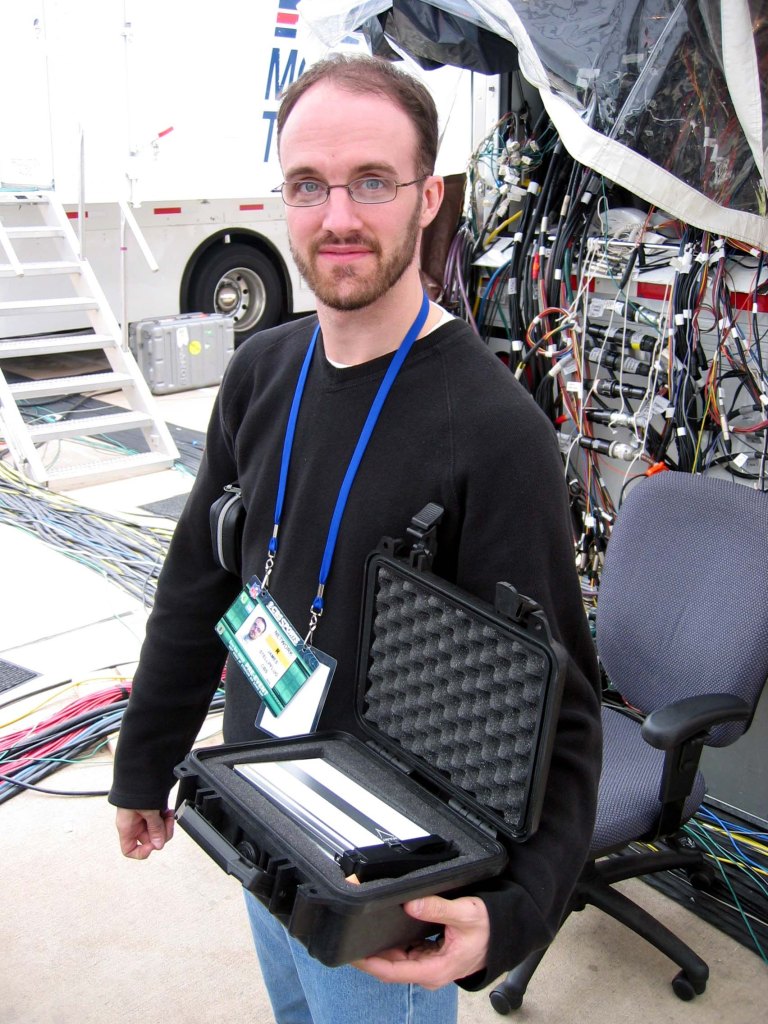
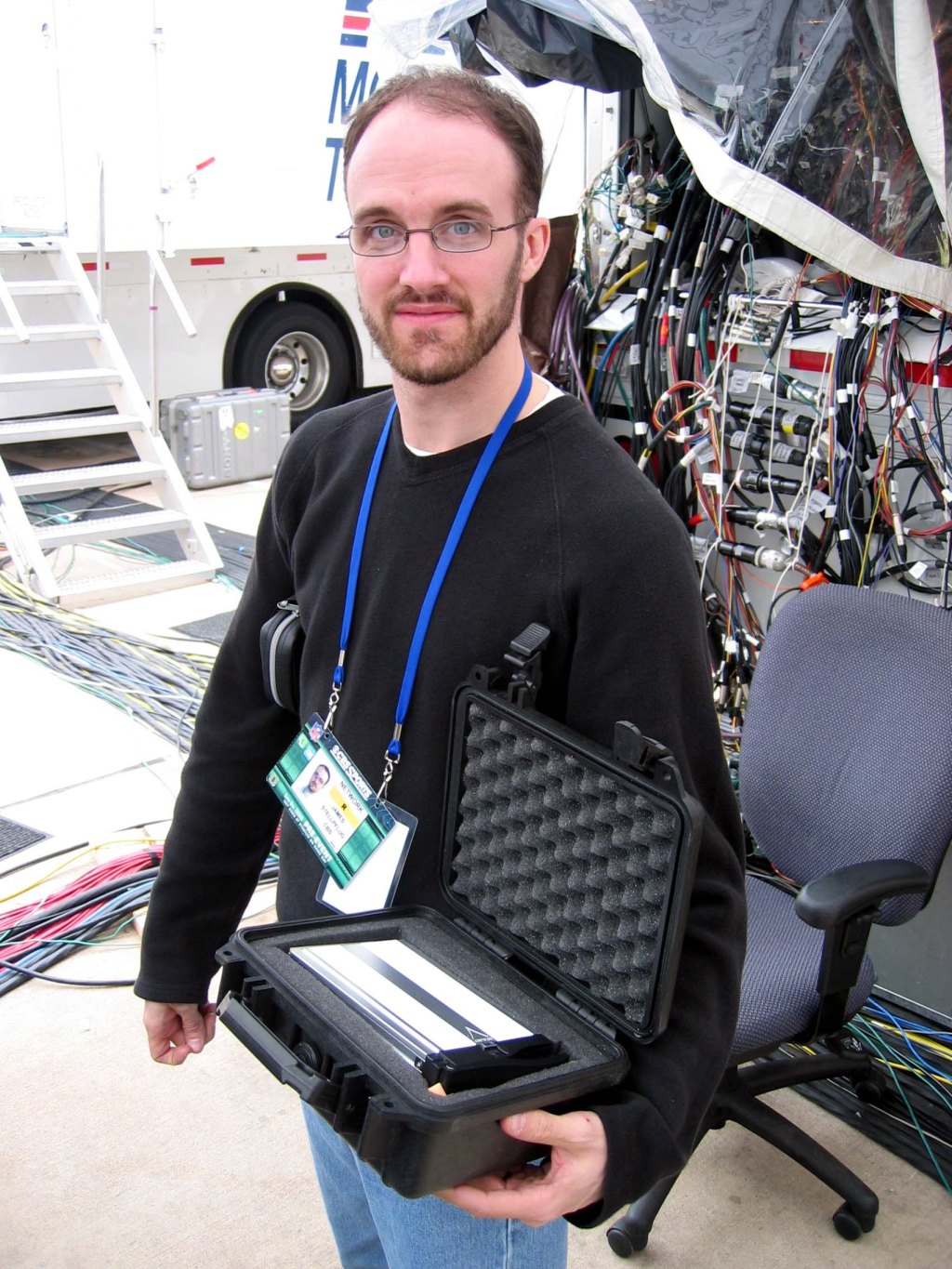
Standing outside the SDI core with a file based transport carrier in 2003
The transition is never the hard part. The status reset is.
Every transition quietly resets the hierarchy. The guru of the old system becomes a beginner again, and how an organization handles that moment — with respect or with dismissal — determines whether its best people lead the change or fight it.
The predictions are directionally right and always wrong on timing.
Everything people said about digital eventually happened — years later than promised, and unevenly. Plan for the direction; don’t bet the facility on the timeline.
Three transitions from now, these will still be the lessons. The technology names change. The physics of change doesn’t.
What’s the implicit step your operation lost in a transition — and how long did it take to notice?


Leave a Reply