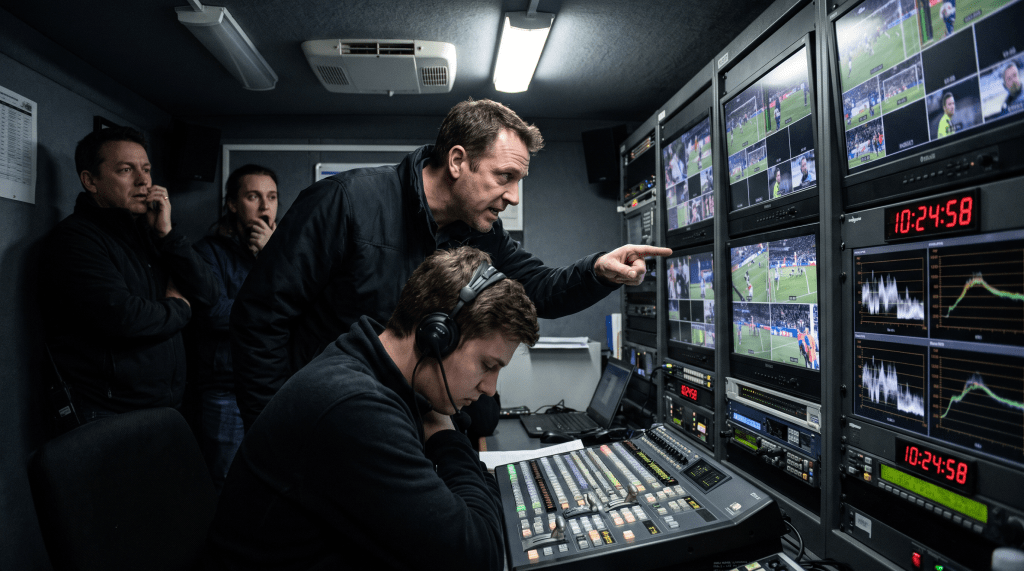
Live broadcast teaches a form of leadership you cannot learn in a seminar, a book, or a business school case study: how to be the calmest person in the room when everything is going wrong, in real time, in front of an audience that will never know how close it came.
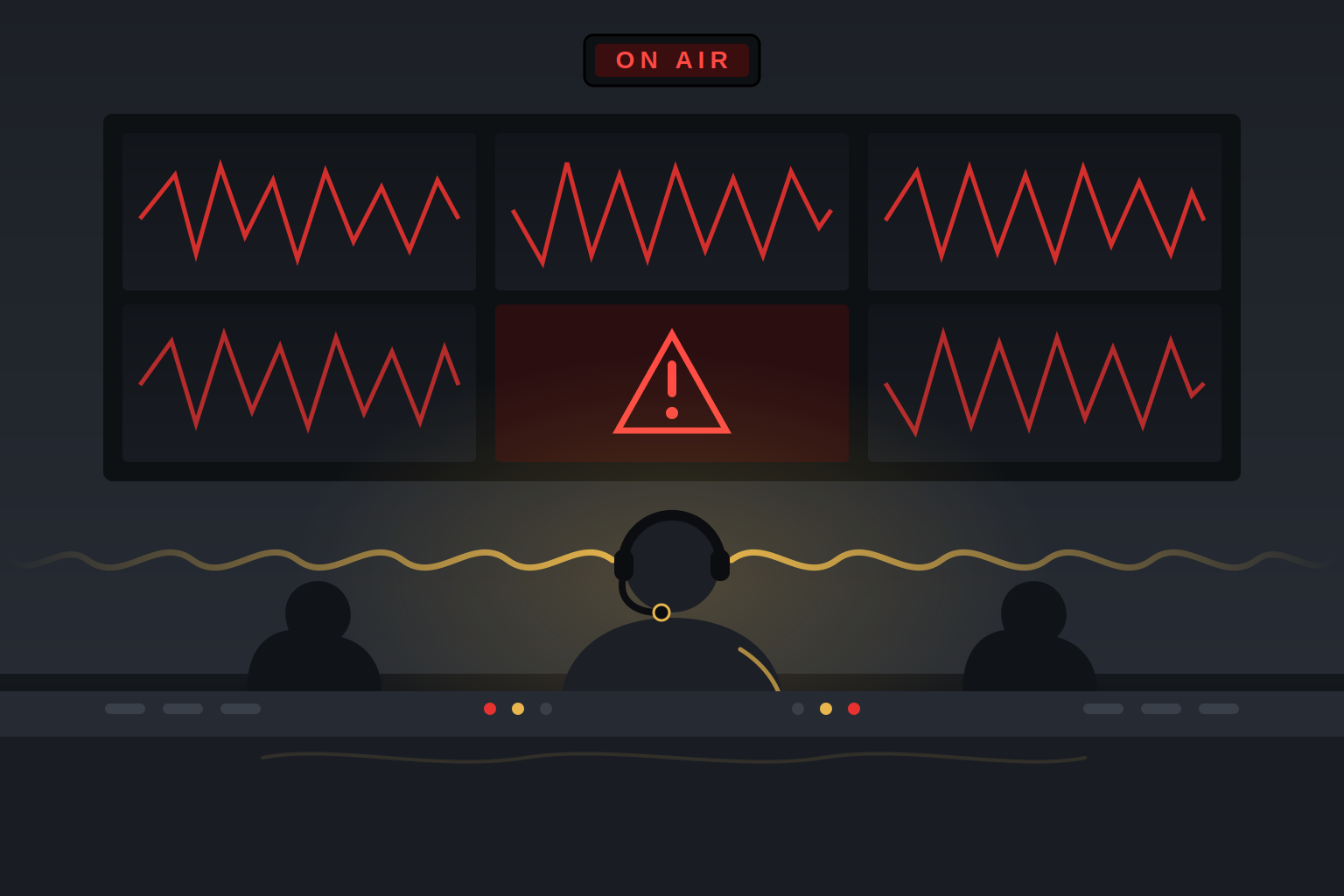
I’ve watched it done brilliantly. I’ve watched it done badly. And I’ve had to do it myself multiple times. Over the years I’ve come to believe calm isn’t a personality trait at all. It’s a signal path — and like every signal path, it flows downstream.
The room calibrates to the tone, not the words
Watch the best leaders in a control room or a truck when something breaks, and you’ll notice the first thing they do is counterintuitive: they slow their voice down as events speed up. Panic is contagious — but so is calm, and the crew calibrates to the leader’s tone long before it processes the leader’s words. A steady voice on the headset is worth more than a brilliant plan delivered in a shout.
Triage out loud
The second thing they do is say the priorities out loud: “Air is fine. Fix the backup.” Six words — and suddenly five people stop solving five different imagined emergencies and converge on the real one. In a crisis, the scarcest resource isn’t skill. It’s shared focus, and the leader’s job is to broadcast it.
The blame conversation can wait
Mid-crisis, “who did this?” is poison in the return feed. There will be time for the post-mortem — a good one, honest and blameless and thorough — but the moment the red light is on is not that time, and the best leaders, Directors, Producers visibly hold that line. The crew notices. The crew remembers. And the next crisis, they tell the truth faster because of it.
Absorb pressure downward, never pass it
And the fourth discipline, the rarest one: pressure from above stops at the leader. The network is calling, the client is watching, someone important is unhappy — and none of it reaches the crew, because the crew gets the problem to solve, not the politics around it. That’s not shielding people from reality. That’s keeping the signal path clean so the show survives.
The most exportable skill we have
Here’s the remarkable part. People who learn these disciplines under the pressure of live television turn out to be exceptional at them everywhere else — in boardrooms, in budget crises, in product launches, in life. It might be our industry’s most exportable skill, and nobody prints it on a certificate.
So let’s drop a waypoint: calm is a signal path. It originates at the top of the headset and flows to every position in the room — or the panic does. Every leader broadcasts one or the other, every day, whether they mean to or not.
Choose the feed you’re sending.


Leave a Reply