
Every IP transition presentation I’ve seen focuses on the technology. Almost none focus on what actually determines success — and it isn’t the network diagram.

A few years ago I was talking with an engineer whose facility had gone through a complete overhaul: new control system, new underlying media processing, a genuinely modern design, all put in three years prior. So I asked him the simple question: how did the IP transition go?
His answer came fast. “This is NOT an IP system. We weren’t ready when we put this in, and it’s still SDI for the majority.”
It surprised me enough that I did what I always do — I got curious and dug in. Why do you feel it’s not an IP facility? Why do you think you should have done more at the start? And the more he answered, the more I realized something he couldn’t see from the inside: he was measuring his facility against an ideal of purity, and grading himself a failure for falling short of it.
But look at what had actually happened in the years since. That facility had more flexibility than the one it replaced. It enabled more creativity. It was returning significantly more on the investment, year after year — precisely because it had been conceptually designed around IP thinking, even if the signal path wasn’t 100% IP. The engineer had underestimated his own transformation. He’d built something that broke through the old monolithic constraints, and he was disappointed in it because it didn’t match a slide.
Here’s the lesson I took from that conversation, and I’ll challenge almost anyone with it:
“Is this a real IP facility?” is the wrong question. It’s a binary — on or off, black or white, pure or compromised — and binaries are how we constrain our own thinking. The facilities that win aren’t the ones that achieved some certificate of IP purity. They’re the ones designed around the mindset: flexibility, software thinking, freedom from the fixed walls of the old routing-switcher world.
The routing switcher didn’t just route video. It organized how the whole building thought — where every signal lived, because you could touch it. IP doesn’t just change the wiring. It changes whether your facility is allowed to evolve. A building designed with that freedom at heart is an IP facility, whatever percentage of the path is still SDI.
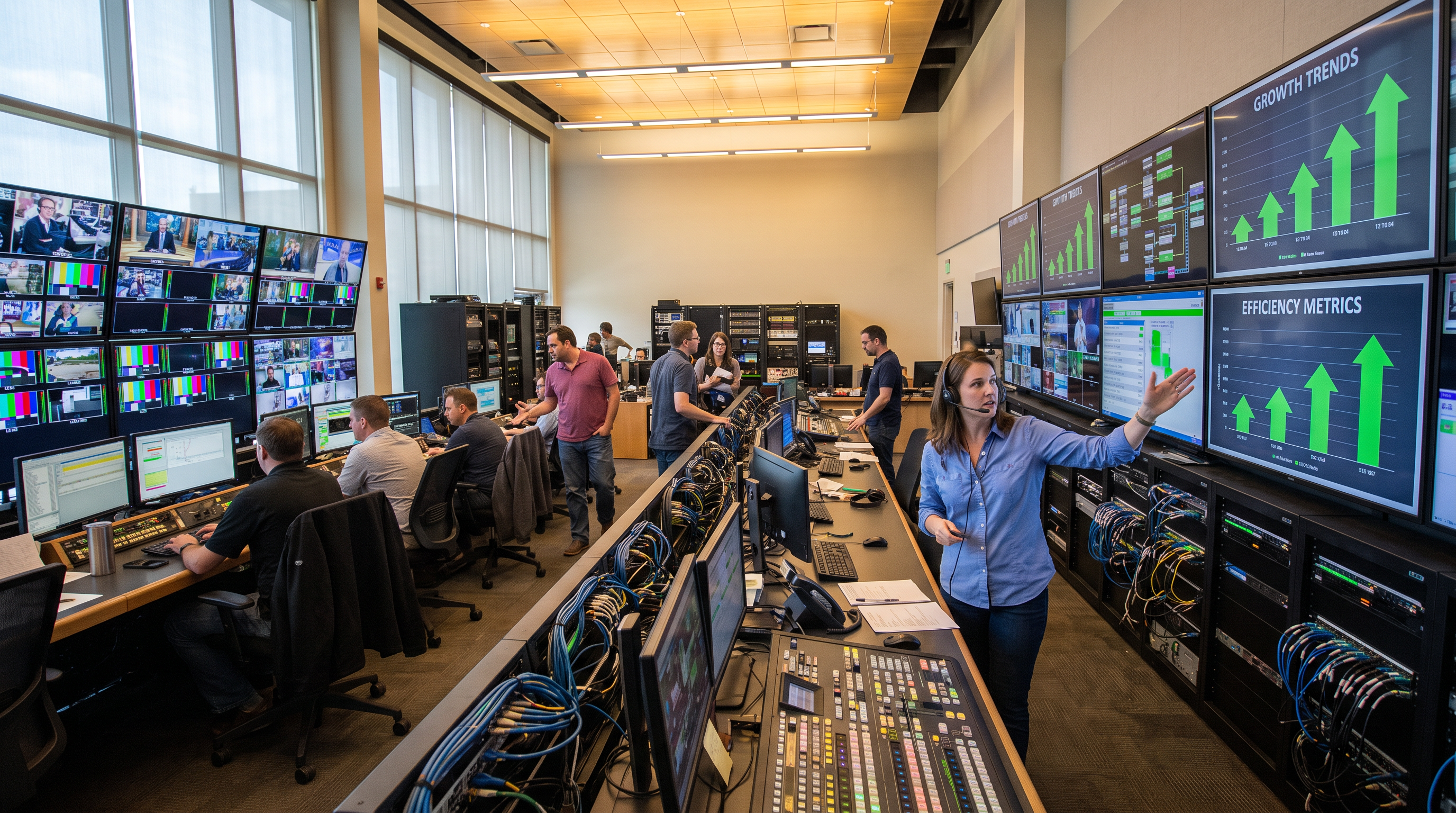
The purist waits for a finish line that doesn’t exist. The pragmatist ships the flexibility and lets it compound. Three years later, one of them is disappointed and one of them is thriving — and from the outside, they might be looking at the very same plant.
If you’ve been through an IP migration — did you measure it by purity, or by what it let you do next?


Leave a Reply