If you worked in production in the tape era, your body still remembers the waiting. Waiting for the machine to rewind. Waiting for the shuttle to find the moment you needed. Waiting for someone to eject, label, shelve, and load the next tape — while the director wanted the replay now, and now was still thirty seconds away, spooling.
The machine was the constraint. Everyone knew it, so we built the entire craft around it. Melts were scheduled around deck availability. Shows were structured around what could physically be cued in time. Whole careers were built on the art of managing scarce transport — knowing which machine had which reel, protecting the deck you’d need in the fourth quarter. When the constraint is real, managing the constraint is the job.
Then the waiting ended
I had a front-row seat for what came next, carrying early tapeless prototypes into trucks and helping a skeptical industry imagine media that didn’t live on a reel. And when tapeless arrived for real, the promise came true: no rewind, no shuttle, no tape change. Any moment of the event, available instantly, to anyone. The machine simply stopped saying “wait.”
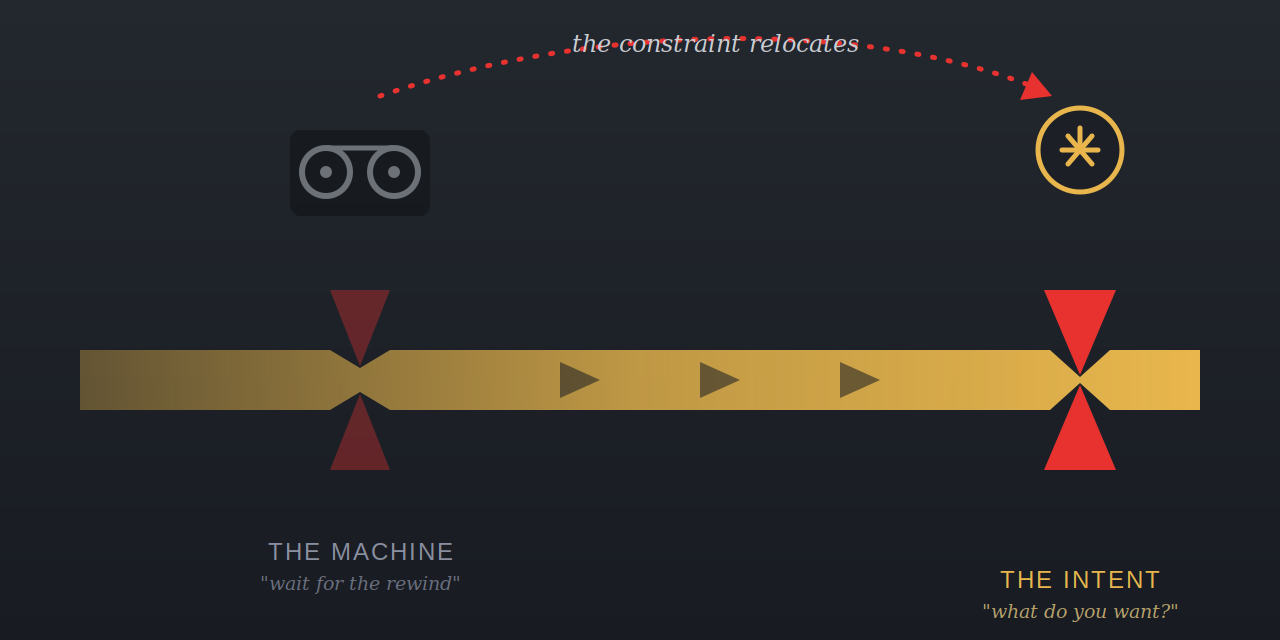
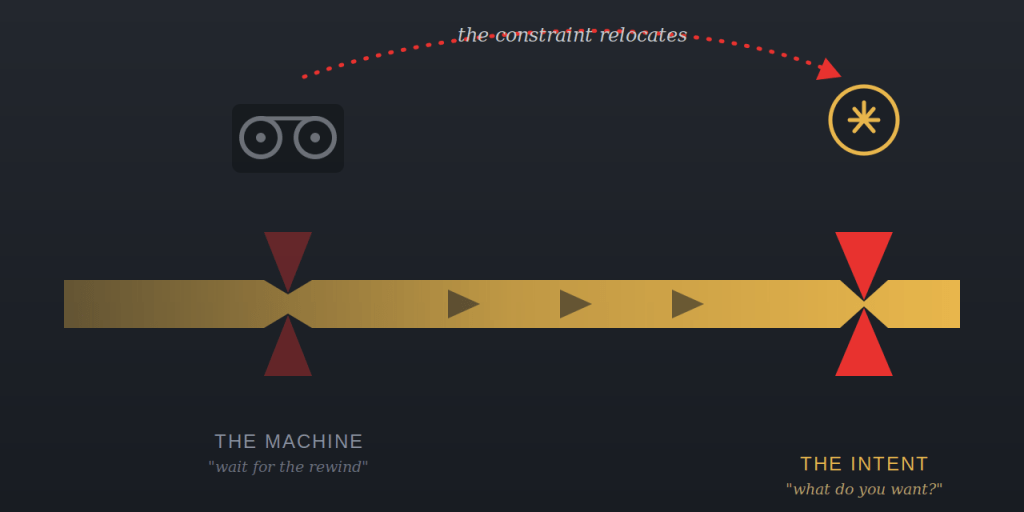
And here’s what nobody fully expected. The constraint didn’t disappear. It moved — from the machine to the people instructing it.
When the system can give you anything instantly, the limiting question is no longer “can we cue it in time?” It becomes “what do you want?” The throughput of the show stopped being set by transport speed and started being set by intent — how clearly the producer knew the story being told, how sharply the operator anticipated the moment that mattered, how well the room had aligned on what tonight was about. The tape machine stopped being the bottleneck. The ideas did. The intent for the show became the limit of how much could be created.
It’s happening again
Hold that story next to what’s happening in product and engineering organizations right now, because it’s the same transition wearing new clothes.
Agile development — the release trains, the program increments, the estimation rituals, the careful choreography of teams — was engineered for a world where building was the scarce, expensive thing. Development capacity was the tape machine: everyone waited on it, so we built a management civilization around allocating it. Backlogs to ration it. Planning events to synchronize it. None of it silly — when the constraint is real, managing the constraint is the job.
Now AI-native ways of working are doing to building what tapeless did to access: removing the wait. A first draft of anything — code, designs, documents, analysis — in hours instead of weeks. And exactly as before, the constraint isn’t disappearing. It’s moving to the people doing the instructing. The limiting question is becoming “what do you actually want, and how will you know it’s right?” The intent for the product is becoming the limit of how much can be created — and how much of it is worth keeping.
The dangerous part
The trap is keeping the entire management structure built for the old constraint. Ceremonies designed to ration scarce development time become overhead when development time isn’t scarce. Meanwhile the new constraint — intent, judgment, alignment, knowing what “good” looks like — has almost no structure supporting it, because nobody has admitted yet that it’s the constraint. It’s a facility that went tapeless and kept scheduling around deck availability, while nobody was minding the one thing that now set the ceiling: what the show was trying to say.
The crews that thrived after tapeless weren’t the fastest button-pushers. They were the ones with the clearest picture of the story — because once anything was possible instantly, knowing what you wanted became the entire game.
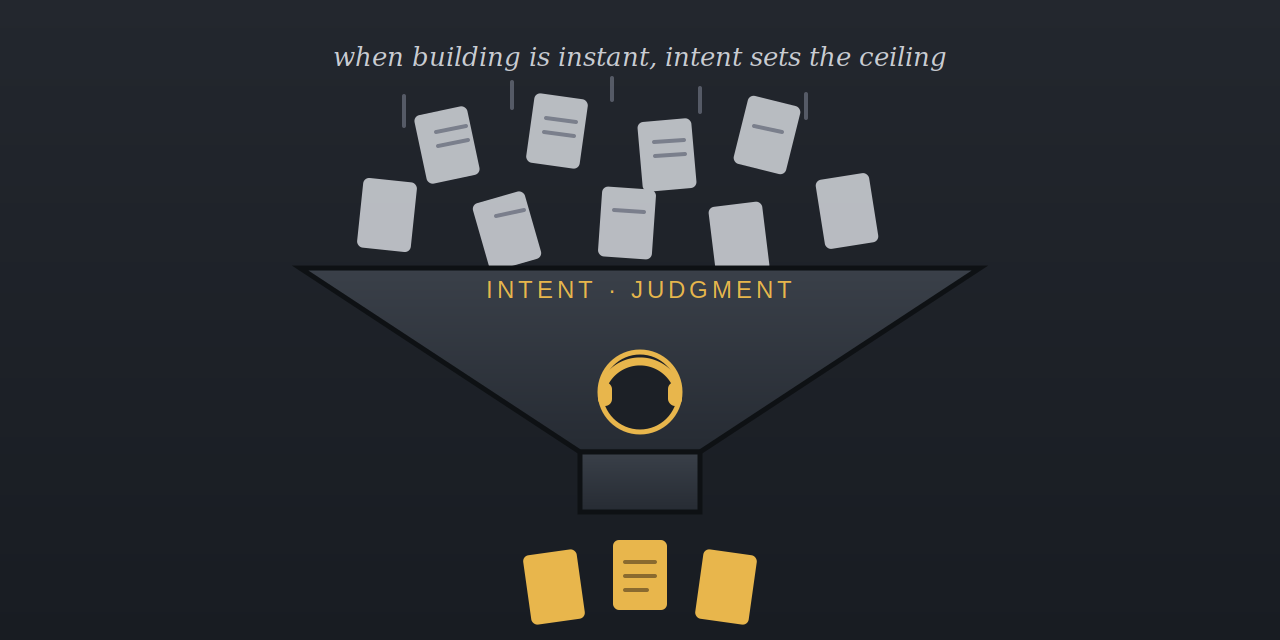
So let’s drop a waypoint: don’t ask whether your framework is modern. Ask where your constraint actually lives today. If your organization still runs like the machine is scarce, you’re managing a bottleneck that moved out years ago — and starving the one that moved in: intent.
Because the bottleneck always moves. It went from the machine to the imagination once already. We watched it happen. This time, let’s move with it on purpose.


Leave a Reply